In this paper, we highlight the growing urgency of sustainability transitions in general and circularity transitions in particular, which is hardly taking shape in practice. We explore new pathways to accelerate such transition, focusing on a regional scale. We frame the lack of change as a multi-faceted, wicked, problem or organisation. Two specific aspects of increasing complexity are explored: extension of the value set taken into consideration by actors, and expansion of actor types involved. Our value-actor matrix that illustrates this two-dimensional increase of complexity and points to societal coordination as the main problem of circularity transitions.
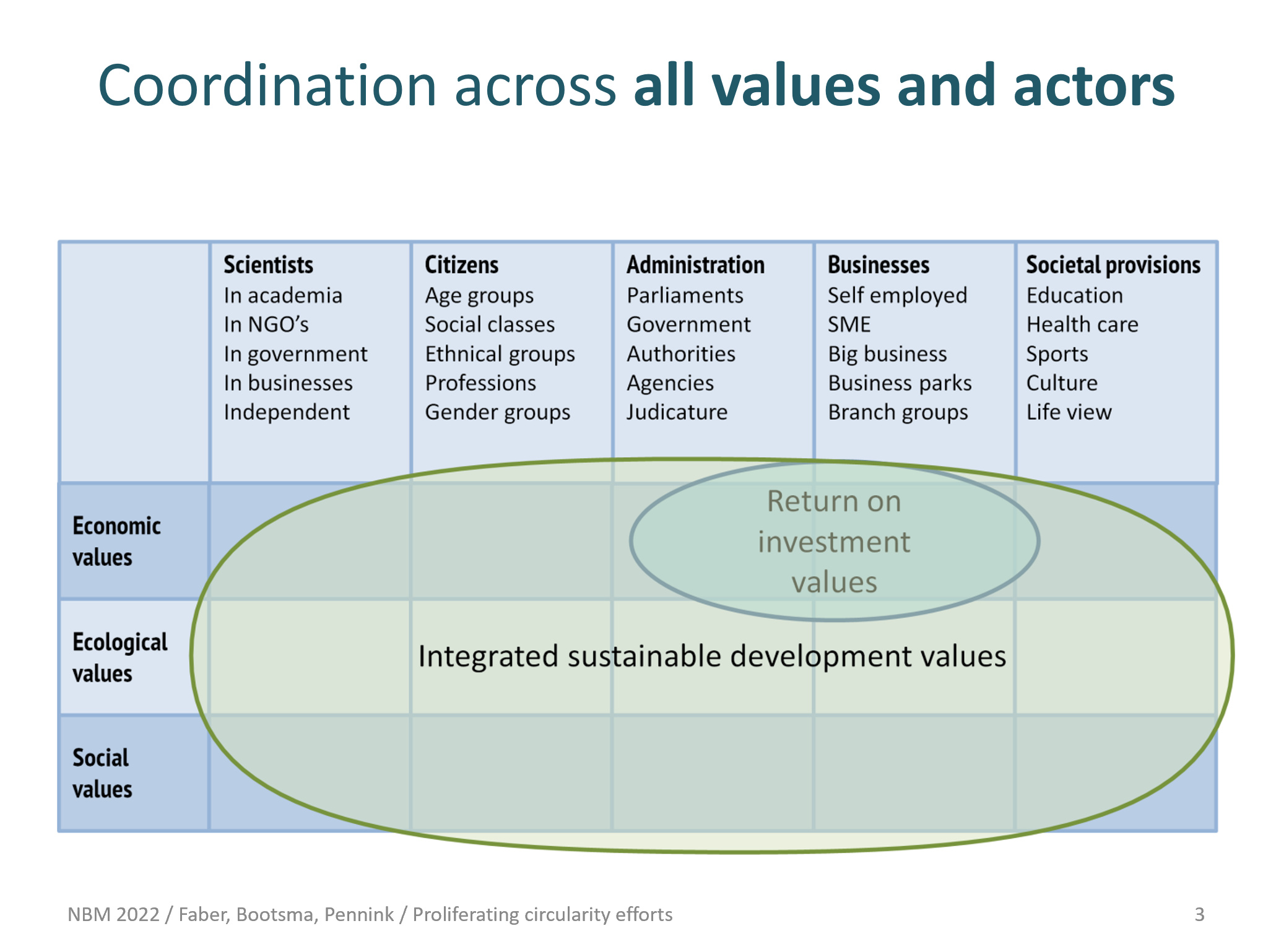
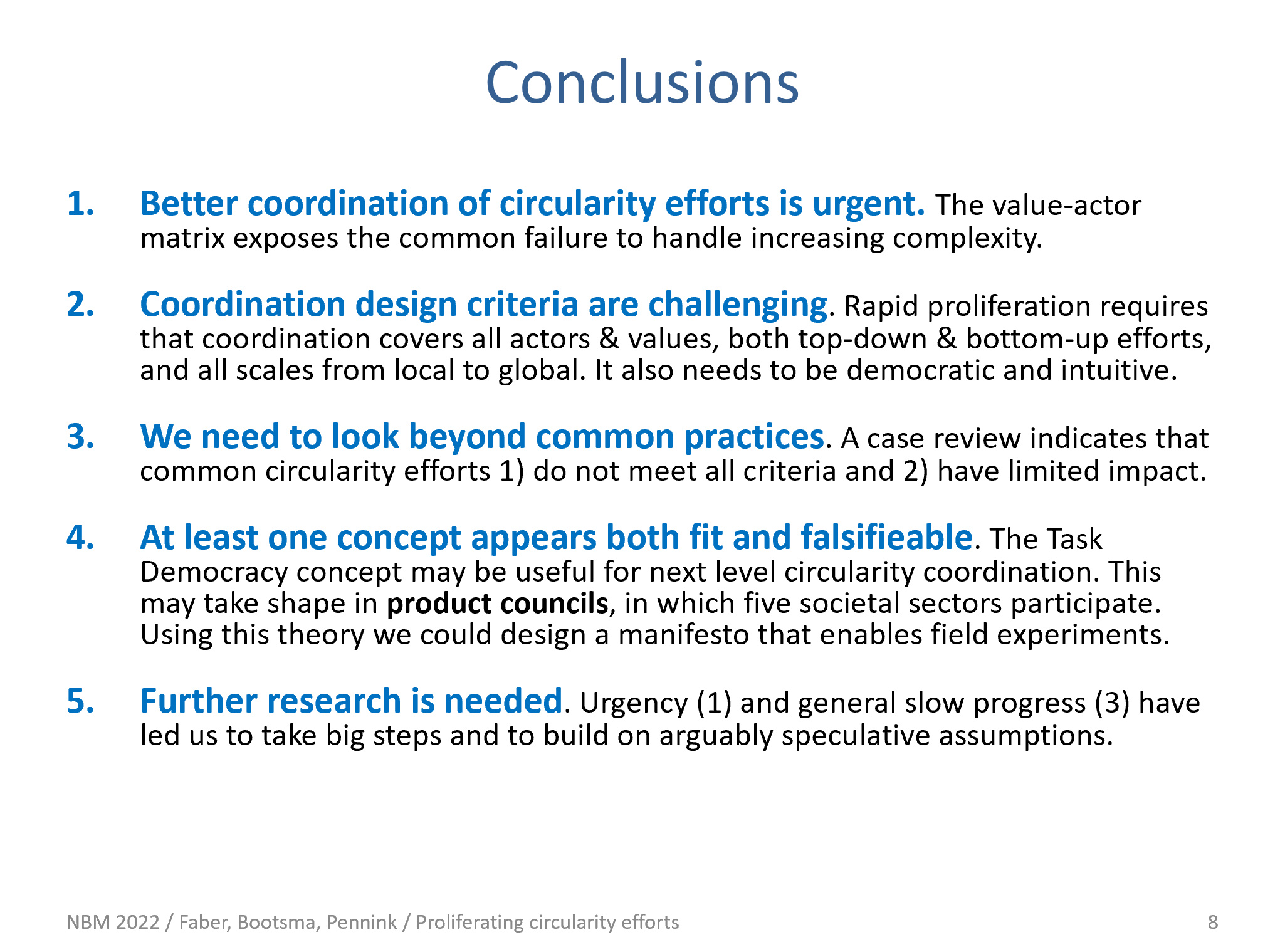
We define four criteria for new coordination models: integration of top-down and bottom-up efforts, scalability from local to global, diplomacy between ideological and sectoral coordination and intuitiveness for rapid proliferation. We use these to analyse five cases, leading to the identification of a common cause of the lack of change. Next, the concept of task democracy is explored, attempting to fix the cause and customise it for a circular economy. The resulting framework takes shape in an open-source manifesto for product councils, on local and regional scales. This research takes large and sometimes speculative steps and the result is largely untested. Yet it shows one pathway to acceleration, which may inspire further research.
Lumsa University
Rome
Italy